


- Dec 29, 2023
- 12 min read
Greetings, readers, writers, and supporters. It’s time once again to recap the year at the writer’s desk. In addition to my first full year of weekly blog posts, it has been a productive, if uneven 2023, full of personal changes. There were some bumps in the road—some highs, some lows. I suppose every year has them. When I looked back at my 2022 recap, I was surprised at the excitement I had looking forward to what this year would bring.

What did it bring? It was a year of exhaustion, anxiety—fast-paced and whirl-a-ma-gig while also bittersweet. Many of you read my piece on losing my friend Macey, our little furball who loved us a bunch for sixteen years. Falling on the heels of that was turning 40. I may have made light of it in my birthday post, but I couldn’t concentrate on as much as I would have liked this year because that number was lumbering toward me, and I couldn’t stop staring it in the face. It is true that day turned out to be just another day, but the worrying and the waiting was tiresome on the brain and affected the heart too.
While 40 is just a number, it’s a number that statistically means your time on Earth is more than half over. Talk about perspective—perspective that smacks you in the face until you think over choices you’ve made and, if you’re an introspective type (say, a writer?), those choices linger in the brain, keep you up at night. Don’t get me wrong—it often provides you with good copy, but it’s not always a pleasant thing.
A lot of my sturm and drang occurred when I saw my oldest nephew get married back in May. As happy as I was for him, it was quite the thing to be the rogue, single uncle watching his brother’s kid (half my age) marry before himself. I hid a lot of it at the time, but I did a lot of crying that weekend—not out of awe from the ceremony (which was beautiful), but out of self-pity, which isn’t a pleasant thing to admit, but I suppose if you’re a writer, you put it all out there, warts and all.

Following this was the adventure of acting for the first time in seventeen years for Birmingham Festival Theatre’s production of Waiting for Godot as part of their 50th anniversary season. When I initially auditioned, it was out of mild curiosity if I still had “it.” Then, throughout the rehearsals and performance, I had to bring “it,” but to say the process was debilitating would be an understatement. Playing Estragon, his physical ailments soon began to become my ailments, his depression started to become mine and, worst of all, his inability to remember anything seeped in as well as learning the lines (and working a full-time job and writing) was almost too much to take. The days began leaving for work at 7am and arriving back home somewhere around 10:30pm.
While I enjoyed playing with my costars Cliff Spencer and Ray Cole, and I enjoyed a healthy run with decent audiences, I feel like it robbed me of time. Time I could have spent with family, friends—writing, especially. I think it will always be an experience I look back on and simultaneously smile and wince at at the same time. It was a good thing, but it was too much to take on. Yes, I suppose I proved I could still act. But what doth it profit a man if you really don’t enjoy it? I love performing—but rehearsing (unless I’m the playwright)—I despise. Godot was no different. Perhaps if it had played when it was supposed to—January/February—I would have had more time to concentrate as I had a less-taxing job at the time. But a personal issue of the director left the theater scrambling to wedge the show in right when the 51stseason should have been beginning.
We should be proud of what we did—a Godot with some genuine laughs and a real crack at giving Beckett his due as one of the world’s great playwrights. He is one of only two authors whose work I’ve performed twice—I acted in a radio version of Words and Music while studying at Bennington College—and it is indeed always good to learn from the best.
As to the more positive aspects of the year, a lot of it I’ve already reported on the blog—seeing one of my favorite singer/songwriters, James Taylor, in concert was a great thrill, playing percussion once again for the band The Cash Domino Killers for their Halloween show at the Sugar Creek Supper Club was a blast as playing music always is. That event happened on the same week I took my only vacation of the year, and I spent it alone at home. They call it a staycation and I think it’s overrated. Hoping to do some more significant traveling this next year instead of just to and from work.
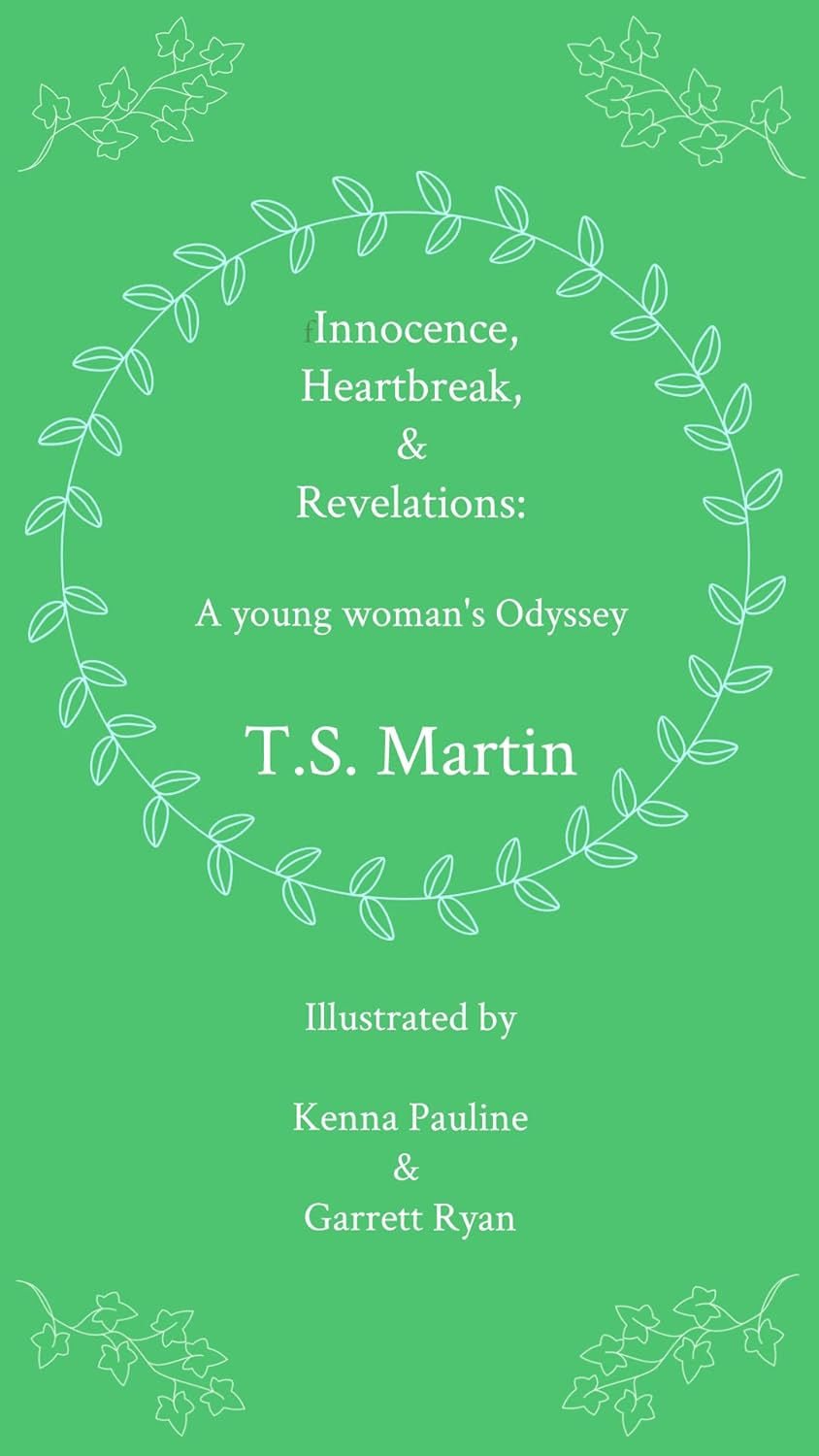
I was happy to support a friend from my time in Montgomery, T. S. Martin, who released a gorgeous volume of poetry entitled Innocence, Heartbreak, & Revelations: A Young Woman’s Odyssey. She has a future as a poet and, by day, she teaches music to kids. Proud of her accomplishments. She honored me by proofing one of my more touchy essays on the blog this year and I thank her for that. I was also happy to support my friend David Phillips with a very different kind of book—a log for those who enjoy barbecuing. What can I say? I like it all, the sacred and profane. And barbecue.
Having started in February of 2022, I kept up my practice of reading a play every day and this will be the first year I will have read 365 plays. It’s a good practice I shall continue next year. I recently read a post online that said, “When you’re feeling creative, write; when you’re not, read.” I am not one of those writers who makes sure he does however many pages a day. I wish I had that kind of time or discipline. Instead, I am like many writers whose works slosh around the brain—sometimes for many months—before they’re ready to emerge.
I used to be ashamed of this, but (again, at Bennington) I took a wonderful course from the novelist Rebecca T. Godwin (Keeper of the House) and she was the first writer to ever admit she didn’t write every day and I’ve felt justified ever since. I’m not one of those folks who spills out diarrhea of the mind on the page and wait until something happens. Each of my plays is the result of careful plotting in my head. I don’t begin until I know the ending and, while the process still involves discovering things, I think plays are better for it overall.
At any rate, some of the works I read this year were fascinating, some were close to being, and some missed the mark, but I don’t regret reading any of them as every play teaches you something. I once again this year got to dive deeper into the theatre texts of Austrian Nobel Prize-winner Elfriede Jelinek, including her magnum opus for the stage, Sports Play, which was wonderfully translated into English by Penny Black for performance in the UK during the ’12 Olympics. Maybe a decade or so ago, I reached out to Ms. Black to congratulate her as I found her script more playable than the standard translations by Gitta Honegger. She was appreciative and we corresponded off and on during the mid-teens.
I included more opera and musical libretti this year, including Hair (the original Off-Broadway version, quite different from the show that emerged), the Who’s Tommy, John Adams’ brilliant Nixon in China, my favorite musical not written by Sondheim—Chess (two versions in fact), and I ate up the complete libretti of Richard Wagner’s The Ring of the Nibelungen like an elephant, one bite at a time. I even managed to track down a hardcover version of Lillian Hellman’s original libretto for Leonard Bernstein’s Candide—a rare book to be sure because the Hellman estate refused for her script to be used in future productions following its flop premiere on Broadway. That was probably for the best as Hellman is one of many playwrights not suited to the form of a musical libretto. Allegedly, she wanted to use Voltaire’s satire to send up HUAC, but most of that material was cut by Tyrone Guthrie by the time the show got to Broadway, leaving a lovely score and a dour, sometimes funny (more wry, I suppose), but not quite right book.
I suffered through the major works of Bertolt Brecht (I’m sorry, but it’s hard to think much of a man who admired Mao), read a whole slew of interesting plays from mid-century Europe, including David Guerdon’s fascinating version of the myth of the Minotaur The Laundry, Tankred Dorst’s elegant play The Curve, the late Mario Fratti’s brilliant The Cage, Ugo Betti’s Corruption in the Palace of Justice (Betti is the best playwright you’ve never heard of), and Alfonso Sastre’s Anna Kleiber—all of which were the kind of thrilling writing for the stage you don’t see much anymore, as evidenced by the contemporary plays I read this year. Many of them I liked, don’t get me wrong—Steve Yockey’s Bright. Apple. Crush. is quite simply the best ten-minute play I’ve ever read, save Lanford Wilson’s Eukiah. But, except for Lucas Hnath’s Dana H., most of the newer plays I read didn’t move me. Some were funny, but I don’t go to the theatre for snickers. Some were touching, but I don’t go to the theatre for sentiment. When I go to the theatre, I want to be moved—emotionally riven in one way or another. While I didn’t have much of that in reading plays this year, I did have that in seeing Opera Birmingham’s production of a short new opera, DWB, with the composer Susan Kander and librettist Roberta Gumbel in attendance, both of whom I met. They graciously gave of their time to an aspiring librettist.
There was also a lot of re-reading of plays this year. I own more than two thousand playscripts and many are anthologies, and many include the same plays over and over. I simply would bring in another box from the barn and I’d see I had gotten plays I’d already read. But part of this project is actually reading all the books I own, so I saw it as a plus as I got to reconsider many plays along the way. If you follow me on Instagram or X, you know I read and re-read a lot of Marsha Norman’s work and, as almost always with me, was fonder of the plays of hers you don’t know—like Circus Valentine (which flopped in a regional production, but deserves a pro production) and Traveler in the Dark, a play I don’t necessarily like, but admire. There are lot of plays I know are good that I don’t admire, so I guess that’s saying something.
This year, I also re-read the complete plays of Sarah Kane, the greatest British playwright who emerged in the years after Harold Pinter. Her works are dark and violent, but essential reading to anyone who wishes to explore the possibilities of the stage, which are wider and more sprawling than what can be accomplished in almost any other dramatic form.
The highlights of the year, for certain, were all concerned with the writing that emerged. I was honored to have one poem, “The Rain Dance,” awarded 2nd prize in Blue Institute’s Words on Water Writing Contest and another, “Toast to Renee,” published in the journal Literature Today. Two short plays, The Judas Kiss and Approaching the Summer Sun, were also published in the first two volumes of a new periodical called Mini Plays Review. Additionally, two full-length plays in one act, There Will Always Be a Fire and Jeroboam, were completed (the latter, a few weeks ago) and that always brings a smile to a writer’s face. They are both entered into contests, and I hope you’ll keep your fingers crossed.
As a sendoff to ’23, looking forward to a better ‘24, I will once again honor those artists who have passed on and whose lives touched mine in profound ways.
Actors
Charles Kimbrough was a versatile character actor, best known for Murphy Brown, but to me will always be known as the man who originated roles in Stephen Sondheim’s Company and Sunday in the Park with George.
Raquel Welch was a major sex symbol, yes, but also an adept performer, as evidenced in the director’s cut of James Ivory’s The Wild Party and Herbert Ross’ The Last of Sheila, a criminally underrated murder mystery from the 1970s.
Chaim Topol, for me, has a kind of immortality for starring as Tevye in the glorious film adaptation of Fiddler on the Roof, one of the great movie musicals.
Barbara Bryne is a name you may not know well, but every time one saw a performance of hers, it was unforgettable. Between a hilarious scene in Amadeus and remarkable performances in Sunday in the Park with George and Into the Woods, brilliantly captured for television, she is perhaps one of many work-a-day actors who don’t get the recognition they deserve.
Treat Williams, like Richard Gere, was a character actor in a leading man’s body. Nevertheless, his warmth and professionalism elevated projects as diverse as Milos Forman’s adaptation of Hair to later roles in films like Hollywood Ending.
Glenda Jackson was a two-time winner of the Academy Award for Best Actress, but it was her more idiosyncratic performances in small comedic films, like Robert Altman’s Health and Beyond Therapyalways left an impression if the films did not.
Alan Arkin, a fellow Benningtonian, made even small parts memorable, such as his role in Glengarry Glen Ross. Whether he was in meat or marshmallow fluff, his professionalism was evident and appreciated.
Many kids of my generation grew up with Paul Reubens as “Pee-Wee Herman,” a Peter Pan for the ‘80s who made a significant impact on pop culture. My talking Pee-Wee doll is somewhere up in the attic…
Michael Gambon was one of many exceptional actors from the U. K. Perhaps best known for his work in the Harry Potter franchise, he was a consummate actor, delivering some of the finest stage performances of his day in addition to smaller roles in films (The Life Aquatic with Steve Zissou is my favorite).
Piper Laurie was indeed Carrie’s mom but was so much more. For me, her role as Catherine Martell in Twin Peaks made the original two-season series what it was, bringing a menacing audacity to the show’s many turns and twists.
Joss Ackland was a commanding presence on stage and screen, originating the role of Peron in Evita and always bringing gravitas to even minor films, like The Mighty Ducks.
Ryan O’Neal need not have made more than Paper Moon and Barry Lyndon to prove his worth. Beginning as a teenager girl’s idol in Peyton Place, he left behind a solid body of work that was often unappreciated. Another good-looking actor whose actual work was often unnoticed.
Singers
Gordon Lightfoot wrote “The Wreck of the Edmund Fitzgerald” and “If You Could Read My Mind” and if you could do half as well, you’d be cooking with gas.
For many weeks after her death, the vocals of Astrud Gilberto’s recording of “The Girl from Ipanema” stayed in my head, soothing any pain by its gentle bossa nova.
Tony Bennett was the last of a dying breed—one of the great entertainers and interpreters of song who, thankfully, got a second career with one of our current great entertainers, Lady Gaga.
Jimmy Buffett wrote the soundtrack of all the vacations we take in our minds.
Directors
William Friedkin, best known for The Exorcist, made what was (for me) a major comeback with Killer Joe, a movie they’ll be calling a masterpiece fifty years from now. He was fearless and frank, took no B. S., and that must be hard in Hollywood.
Robert Brustein was a leading philosopher of the theatre in the 20th century with arguments you tried to dismantle, much to your dismay. He was directly or indirectly responsible for fostering some of the great American playwriting talent through his work.
Writers
Frank Galati might be unknown to you, but as the stage adaptor of John Steinbeck’s immortal The Grapes of Wrath, he managed to do onstage what John Ford could not even envision with his film version.
Donald Spoto was a popular biographer but managed to capture entire lives in his thick volumes, especially The Kindness of Strangers, a more complete biography of Tennessee Williams than was or has ever been attempted (including John Lahr’s Mad Pilgrimage of the Flesh).
Sheldon Harnick was best known as the lyric writing partner of Jerry Bock, producing the Pulitzer Prize-winner Fiorello! and, of course, Fiddler in addition to The Rothschilds, a musical that never found its voice but has better material than most musicals running on Broadway at any given time combined.
Tom Jones, along with composer Harvey Schmidt, wrote many small-scale musicals, The Fantasticks being the most endearingly popular, being one of the longest running Off-Broadway shows of all time.
A. S. Byatt was a master of the novel and a champion of Romantic literature in a day and age where it was largely ignored. If Possession proves a daunting read, it is—and is worth all the more for it.
Broadcasters
Country Boy Eddie was a significant radio and television personality in my home state, responsible for giving Tammy Wynette her break and, therefore, giving the world a gift.
At the same time Johnny Carson ruled American talk shows, Michael Parkinson did much the same in the U. K. albeit with more witty, acerbic, and probing questions than the average host of a “chat show.”
Bob Barker reminded us to spay and neuter our pets. I hope we’re following the edict.
Producer
Norman Lear’s innovative take on translating British series to American audiences, which resulted in Sanford and Son, All in the Family, Maude, The Jeffersons, and others revitalized the sitcom. These shows had extraordinary power, razor-sharp cultural criticism, and were also wildly funny.
I also include a list of dozens of playwright we lost from all over the world:
USA: Tina Howe, Nathan Louis Jackson, Tom Kempinski, Jerome Coopersmith, Robert Patrick, Lynda Myles
UK: Oliver Emanuel, Thomas Kilroy, John Byrne, Adam Brace, Fay Weldon
Canada: David Fennario, Hillar Litoja
Mexico: Luisa Josefina Hernandez
France: Richard Martin, Roger Louret
Germany: Helmert Woudenberg, Maria Peschek, Andreas K. W. Meyer
Austria: Erwin Reiss
Italy: Mario Fratti, Michela Murgia, Luca Di Fulvio
Spain: Antonio Gala
Greece: Maria Lampadaridou-Pothou
Switzerland: Peter Zeindler
Estonia: Rein Saluri
Slovakia: Tomas Janovic
Serbia: Zorica Jevremovic
Slovenia: Veno Taufer
Hungary: Geza Morcsanyi
Brazil: Narua Carmen Barbosa, Ze Celso
Jamaica: Evan Jones
Dominica: Alwin Bully
Israel: Edna Mazia, Pnina Gary
Turkey: Yilmaz Gruda
Kenya: Micere Githae Mugo
Ghana: Ama Ata Aidoo
Russia: Nina Sadur, Eduard Mizhit, Aleksey Slapovsky
India: Gieve Patel, Tripurani Sharm, Mohan Maharishi, Dhiruben Patel
Pakistan: Shoaib Hasmi
French Polynesia: John Mairai
New Zealand: Renee
Indonesia: Nano Riantarno
Taiwan: Loic Hsiao
Cameroon: John Nkemngong Nkengasong


